Author: Siavash Jaraiedi

  • Louise Bourgeois

    Louise Bourgeois

    Fear and protection held in the same form.

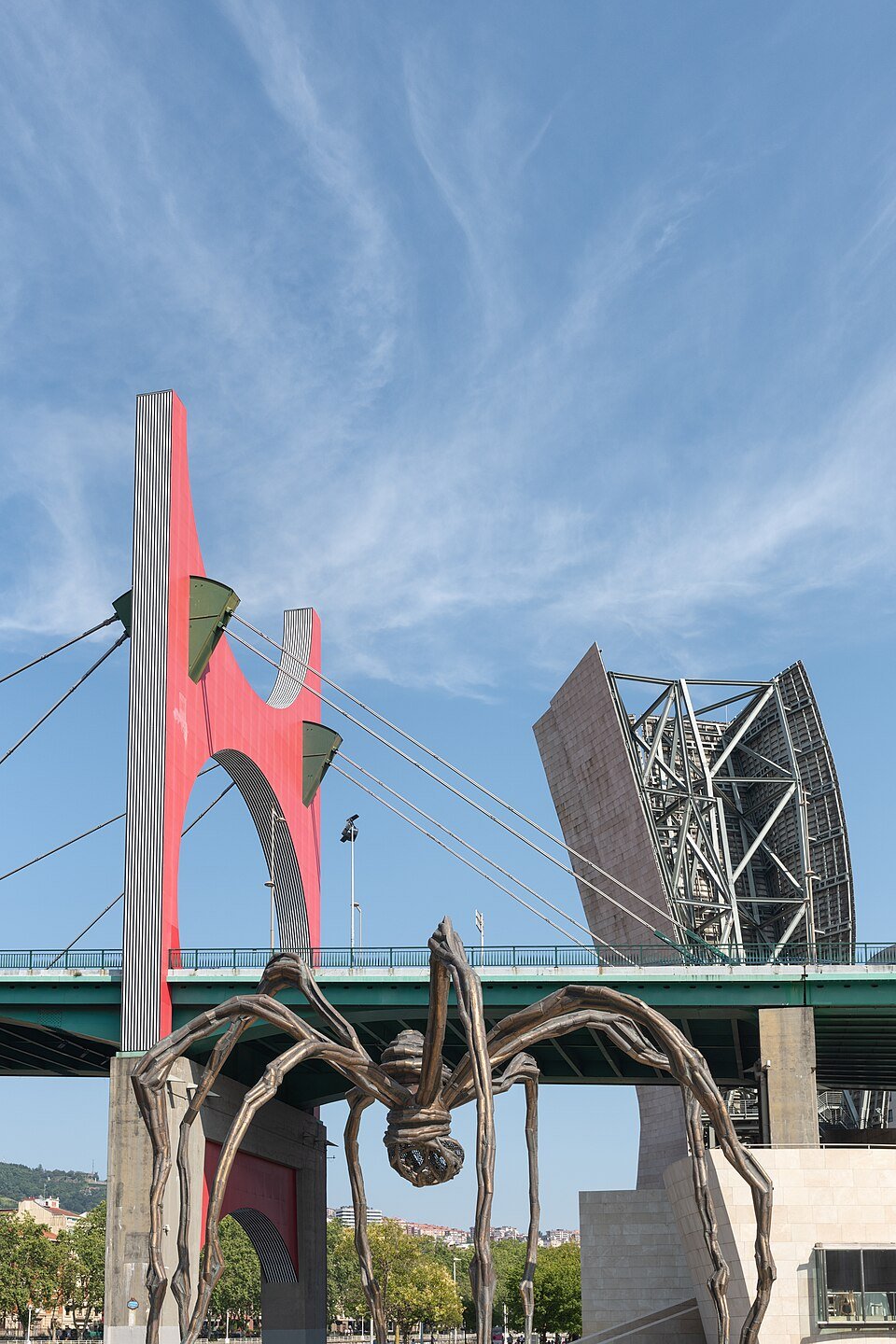
    Louise Bourgeois’s Maman is a giant spider with long, arching legs. The form can feel threatening, but Bourgeois also connected the spider with her mother, who worked with tapestries. Weaving links the animal to the care and repair of fabric.

    Under the spider

    The Guggenheim Museum Bilbao dates Maman to 1999; the Bilbao cast was made in 2001. Bronze, marble, and stainless steel give the sculpture its physical presence, while the open space beneath its body allows visitors to see it from below.

    Its legs frame that space without enclosing it completely. They can suggest a shelter or a cage. The body appears suspended high above the ground, supported by legs that seem slender for such a large form.

    A different meaning for a familiar creature

    The museum describes Maman as a tribute to Bourgeois’s mother. That connection complicates the usual association of a spider with fear. The work can suggest protection and care while retaining an unsettling appearance.

    The photographs reveal different aspects of that balance. From a distance, the legs create a broad architectural outline. From nearer the body, the scale of the sculpture becomes more immediate.

    Two views of Maman
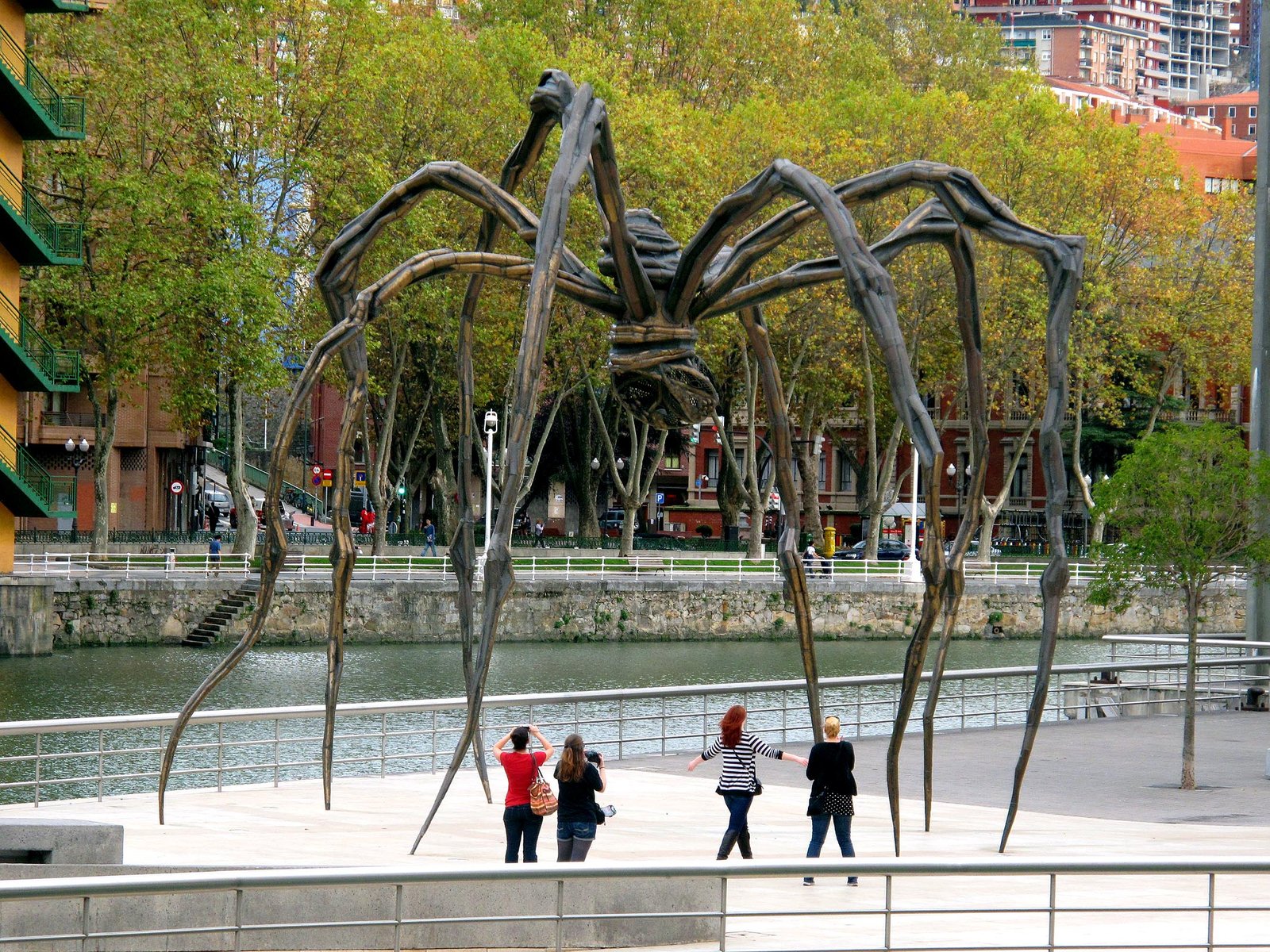
    Louise Bourgeois’s Maman outside the Guggenheim Museum Bilbao.
    Maman’s long legs create an open space beneath its body.
    Long spider legs of Maman framing the space beneath its body in Bilbao.
    Maman stands beside the architecture of the Guggenheim Museum Bilbao.

    Further reading: Guggenheim Museum Bilbao — Maman ↗.
  • Jeff Koons

    Jeff Koons

    A familiar animal at an unfamiliar scale.

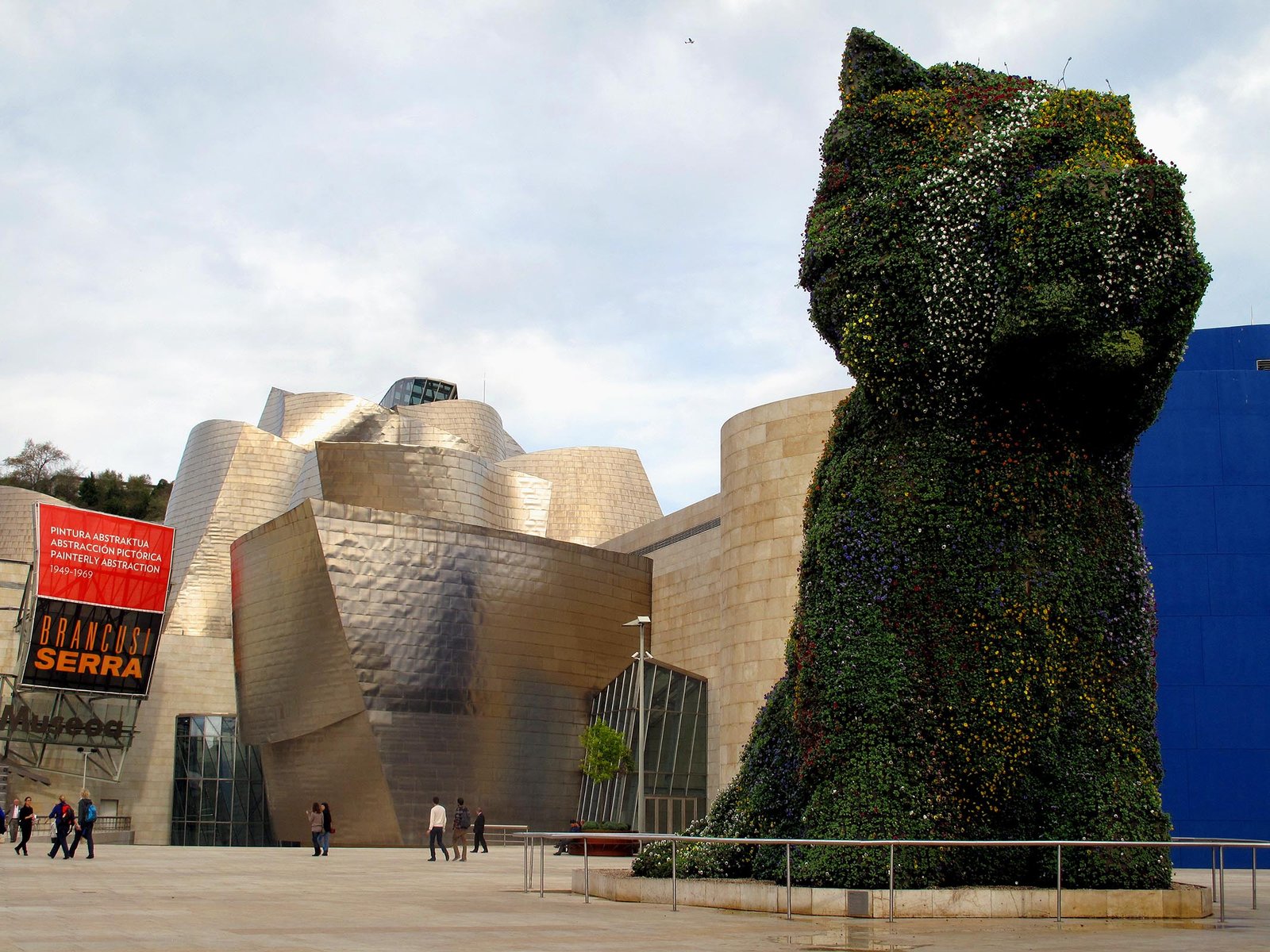
    Jeff Koons’s Puppy takes the recognizable shape of a terrier and turns it into a towering floral sculpture. Outside the Guggenheim Museum Bilbao, the work sits somewhere between an animal, a garden, and a landmark.

    Jeff Koons’s flower-covered Puppy outside the Guggenheim Museum Bilbao.
    Puppy is a large terrier covered in living flowers.

    A sculpture that grows

    Created in 1992, Puppy uses stainless steel, soil, geotextile fabric, an internal irrigation system, and live flowering plants. At about 12.3 meters tall, it changes the relationship between a person and an ordinary household animal.

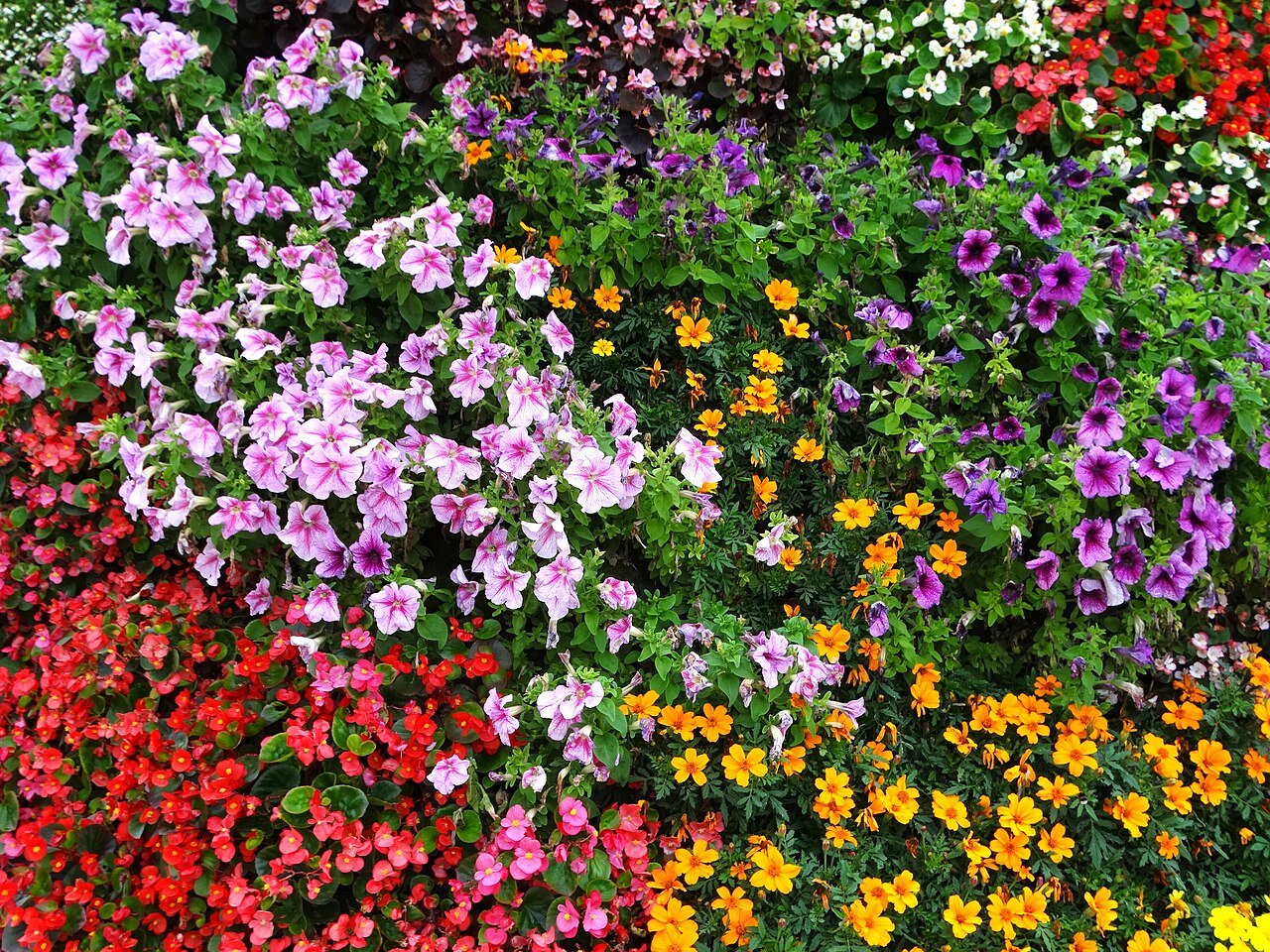
    The flowers form the sculpture’s surface. From a distance they read as a single body; close up, individual plants and colors take over. The work depends on care and growth as well as its supporting structure.

    Close view of the living begonias covering Puppy.
    A close view of the flowers forming Puppy’s surface.

    Recognition and surprise

    The subject is immediately approachable. Its size is harder to reconcile with the small dog it represents. That difference between a familiar image and an unexpected physical presence is central to the experience of the work.

    Unlike a polished mirror, the surface changes through living material. Its texture and color belong to the plants themselves, giving the sculpture a connection with gardening as well as monumental art.

    Further reading: Jeff Koons studio — Puppy ↗.

  • Anish Kapoor

    Anish Kapoor

    A mirror that makes the sky part of the sculpture.

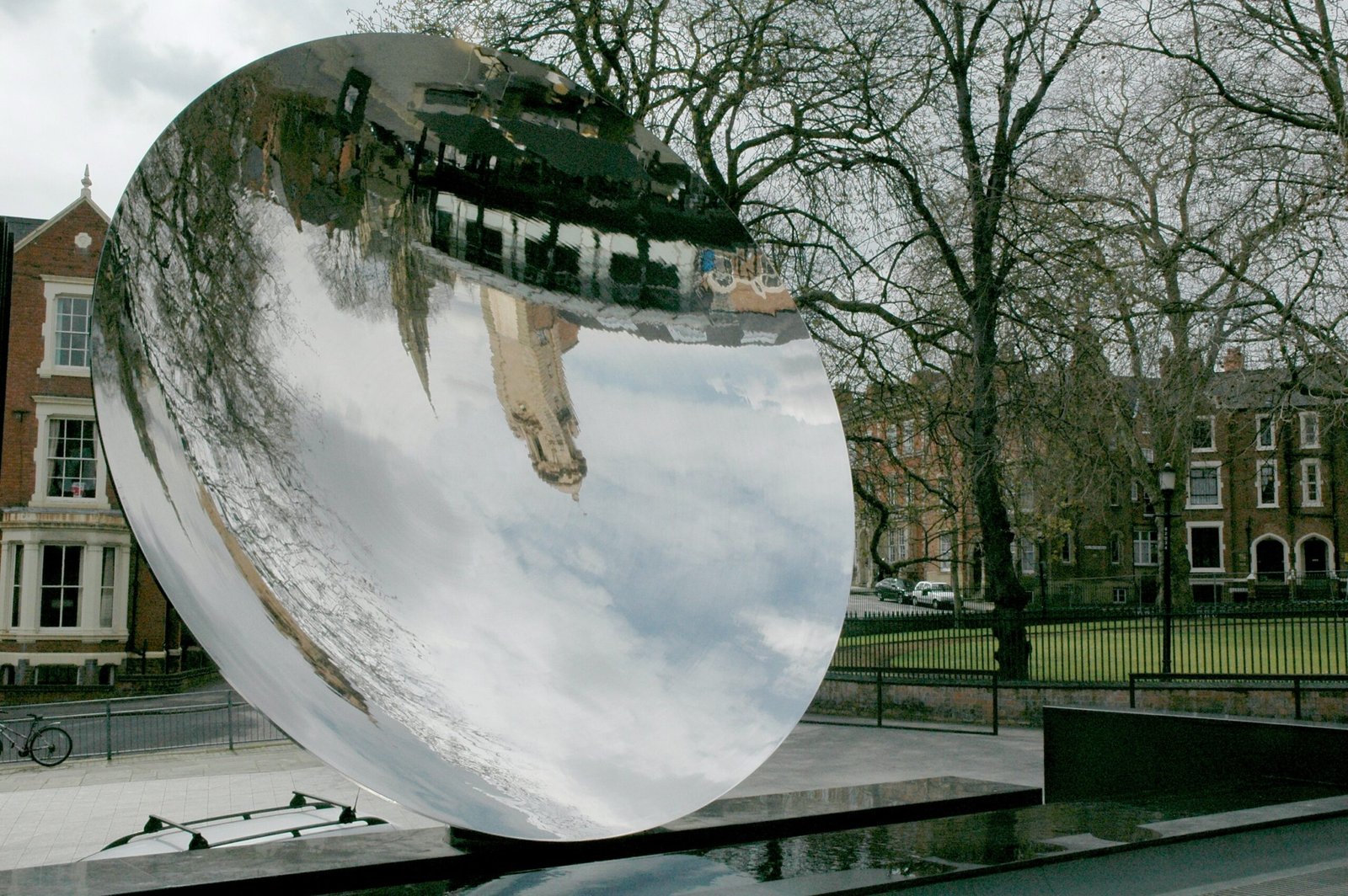
    Anish Kapoor’s Sky Mirror has a simple outline: a curved circle of polished steel. What appears inside that outline is less predictable. The sky, surrounding buildings, and passing people become part of the image on its surface.

    Curved reflective surface of Anish Kapoor’s Sky Mirror in Nottingham.
    Sky Mirror reflects the surrounding buildings and sky.

    An object and an image

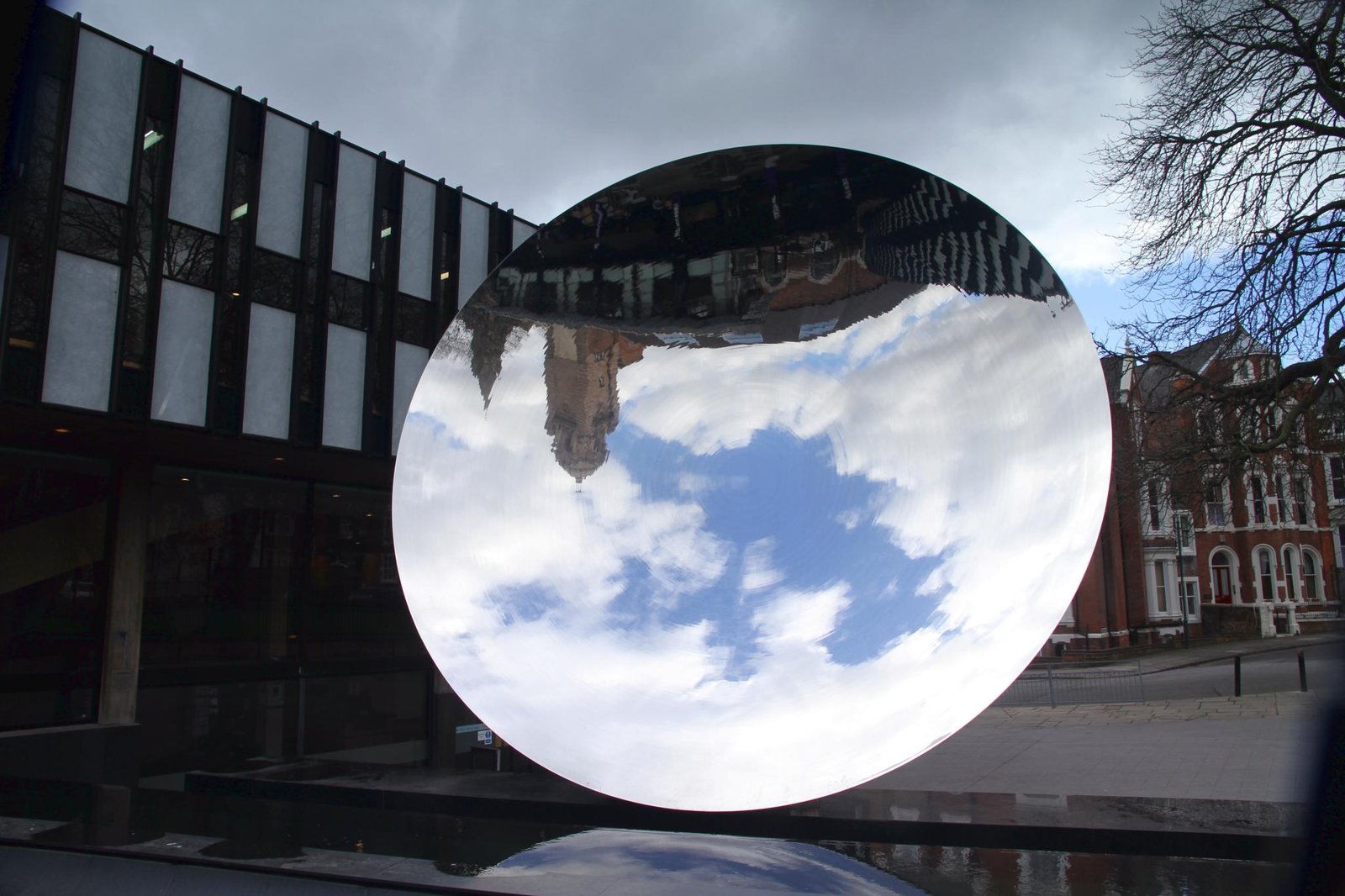
    Outside Nottingham Playhouse, the sculpture sits in a public forecourt. Its curved surface changes the view of that familiar setting. The object stays in place while the reflection shifts with the weather and the position of the viewer.

    The edge of the mirror provides a clear boundary. Inside it, the reflected world seems less solid. This tension between a physical object and an image gives the work its unusual presence.

    The setting matters

    Seen with the theatre behind it, Sky Mirror becomes part of a larger arrangement of architecture, open space, and light. A close photograph isolates the reflective surface; a wider view reveals how much the surroundings contribute to the work.

    Sky Mirror outside Nottingham Playhouse, showing the surrounding public space.
    A wider view shows Sky Mirror beside Nottingham Playhouse.

    The sculpture offers no single, permanent view. Its appearance belongs to a particular place and moment, even as its form stays the same.

    Further reading: Anish Kapoor studio — Sky Mirror, Nottingham Playhouse ↗.