Fear and protection held in the same form.
Louise Bourgeois’s Maman is a giant spider with long, arching legs. The form can feel threatening, but Bourgeois also connected the spider with her mother, who worked with tapestries. Weaving links the animal to the care and repair of fabric.
Under the spider
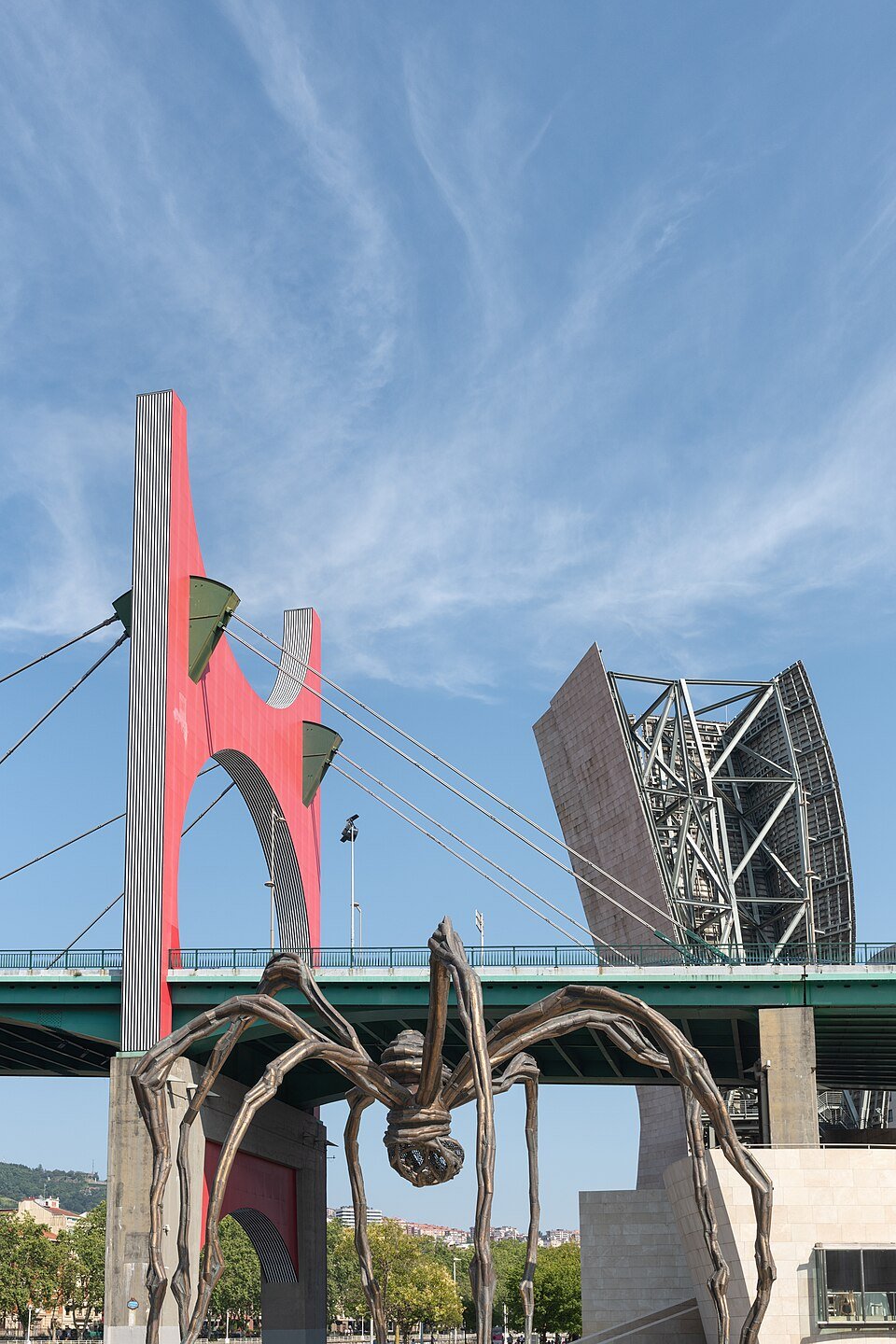
The Guggenheim Museum Bilbao dates Maman to 1999; the Bilbao cast was made in 2001. Bronze, marble, and stainless steel give the sculpture its physical presence, while the open space beneath its body allows visitors to see it from below.
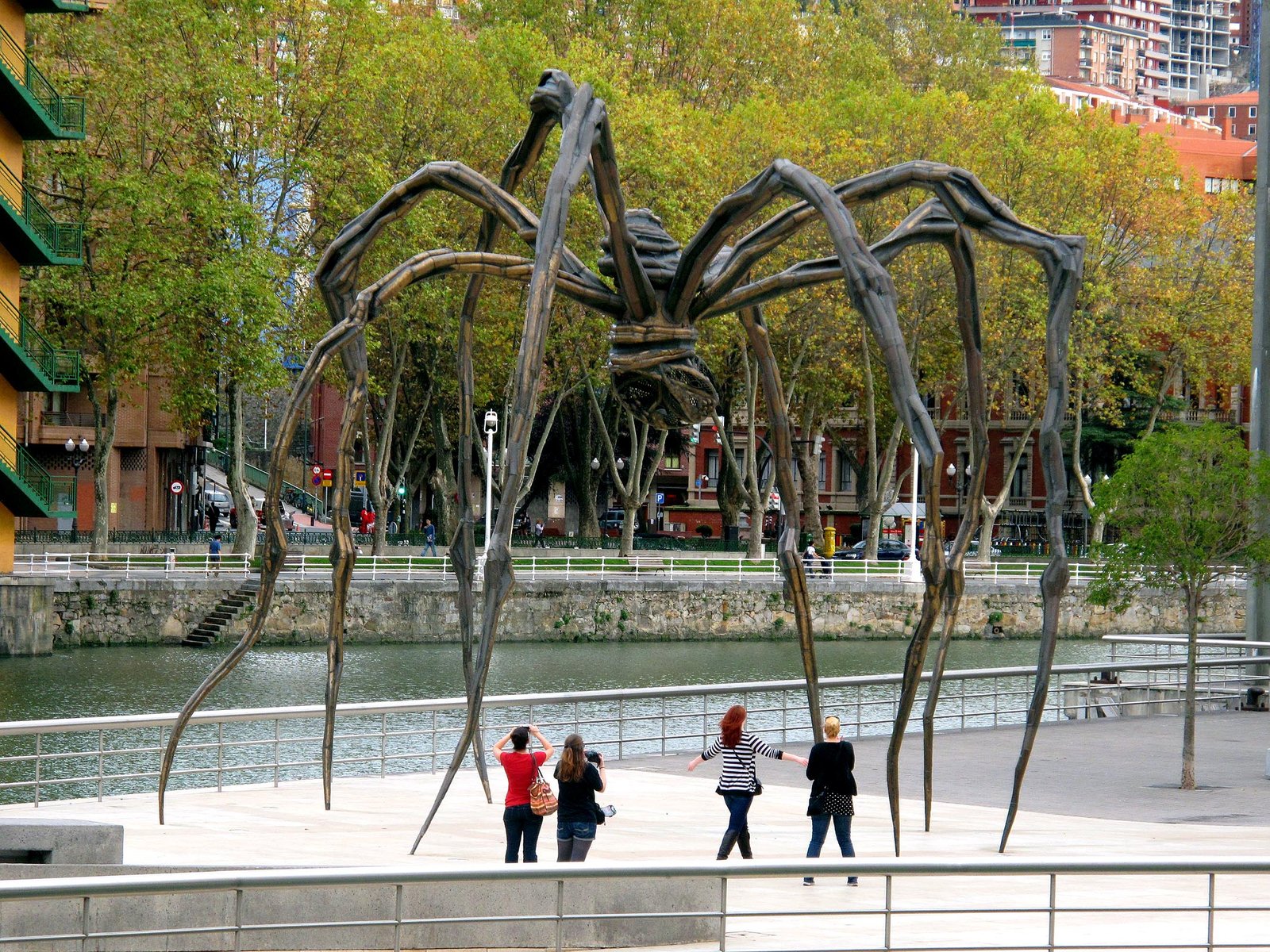
Its legs frame that space without enclosing it completely. They can suggest a shelter or a cage. The body appears suspended high above the ground, supported by legs that seem slender for such a large form.
A different meaning for a familiar creature
The museum describes Maman as a tribute to Bourgeois’s mother. That connection complicates the usual association of a spider with fear. The work can suggest protection and care while retaining an unsettling appearance.
The photographs reveal different aspects of that balance. From a distance, the legs create a broad architectural outline. From nearer the body, the scale of the sculpture becomes more immediate.
Two views of Maman
Further reading: Guggenheim Museum Bilbao — Maman ↗.
Leave a Reply